

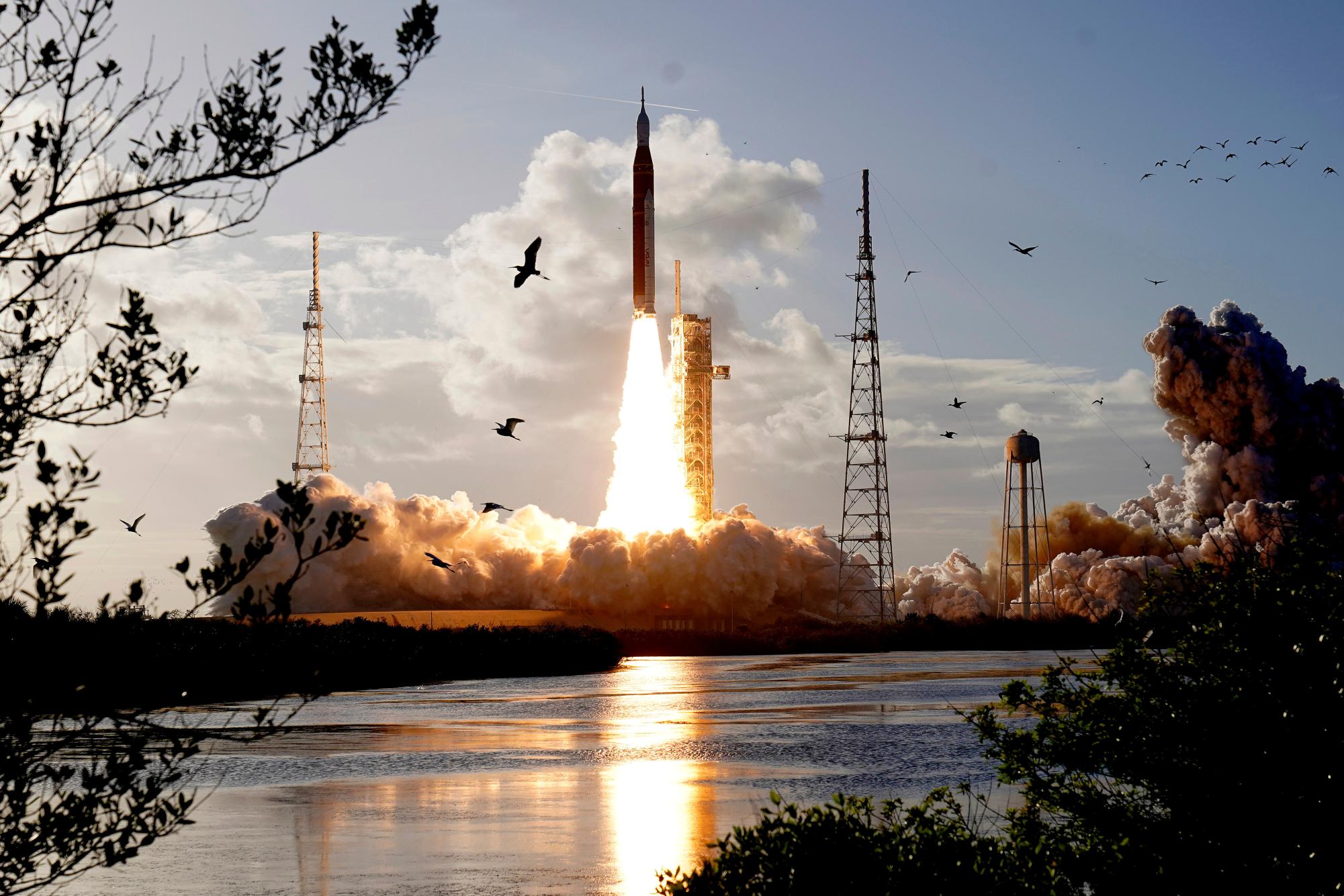
A little over two years ago the unmanned spacecraft, Artemis 1, launched. This mission was the first of the Artemis missions and was meant to test some of the technology before a manned spacecraft could be sent into space.
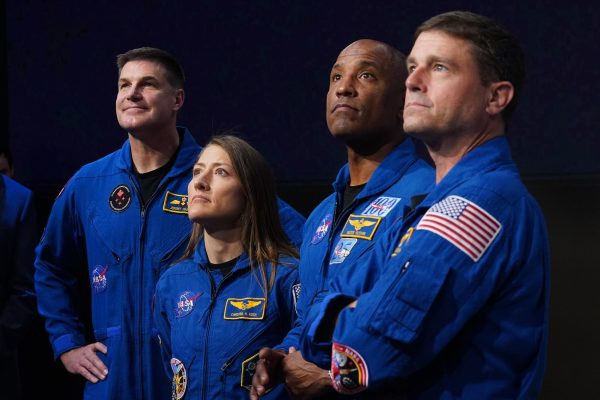
Artemis 2 carried four astronauts: the commander, Reid Wiseman, and the pilot, Victor Glover, were both from Pensacola. The two mission specialists were Christina Koch and Jeremy Hanson. According to en.wikepedia.org Hanson is a CSA (Canadian Astronaut Corps) astronaut rather than a NASA astronaut.
This provided a thrill for all those who followed its launch, flight, and splashdown, but it was even more exciting for the crew of the spacecraft.
In an interview with NBC Koch stated that “Being human up here is one of the coolest things about this mission. We are just people trying to get by. For example, we might go look at the far side of the moon and take in its awesomeness and then go, ‘Hmm, maybe I should change my socks.”
This small aspect of humanity makes us realize that these extraordinary operators are just like us. For example, when asked what item they would bring to the moon, freshman James Mott, Patrick Campbell, and Tristin McCall all immediately replied, “my phone”.
Artemis 2 launched on April 1st at 6:35 pm then continued to loop around the earth twice before completing its main target, circumnavigating the moon. The spacecraft leveraged the moon’s gravity to slingshot itself back around to earth. This was the first time in over 50 years that humans have gone around the moon, marking an important milestone in space travel.
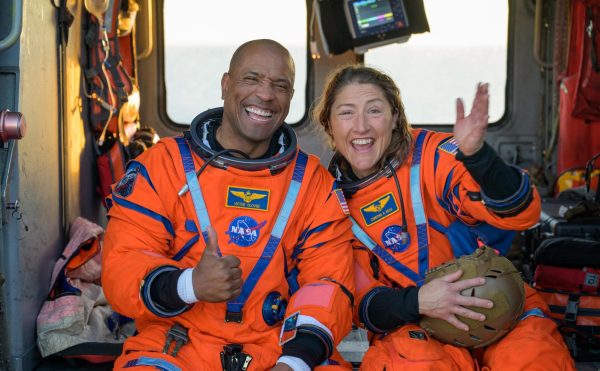
The four astronauts also achieved a world record for travelling the farthest humans had ever flown from earth which, according to nasa.gov, was 252,756 miles surpassing Apollo 13’s record of 248,655 miles set in 1970. This exciting mission was completed with almost no issues but was not without a high level of risk.
When asked if he would go on a mission like the Artemis 2, freshman Tristin McCall said, “I think I would, but I think I would have to, like, mentally prepare myself because you would be doing something very dangerous.”
The Artemis program is NASA’s most recent project. This program is meant to, according to nasa.gov, “achieve the national goal of landing American astronauts on the surface of the Moon and maintaining U.S. superiority in exploration and discovery.” As the program continues, NASA intends on sending even more astronauts to the moon for lunar experiments and discovery so they can look deeper into important questions about our universe. One day they hope the Artemis program will lead to sending people to Mars where we will be able to learn more about the Red Planet and hopefully determine if it ever had life like scientists hypothesize.
Despite seeming like an irrelevant issue to high schoolers, Artemis 2 is impactful for our generation. This program will lead to more like it, and one day, when we’ve all graduated, we’ll be the ones tasked with answering the biggest questions of our universe.
“I think it’s really interesting how we went back and are discovering more about our own galaxy,” says freshman James Mott.
Hopefully, the Artemis 2 mission leads us farther into the world of space travel and gives us what is necessary for NASA’s grand plans of one day sustaining life on places other than our own planet.