

The Strait of Hormuz has been taken hostage more than once by the conflict involving Iran, and it’s safe to say that the vital waters for shipping container ships have once again been disrupted. What matters more than the water itself is that around 20 million barrels of oil a day from Gulf states, or essentially 25% of the global oil supply, are being affected in the process of this and previous conflicts, according to History.com.
However, despite the initial sliver of hope when Iran agreed to reopen it, albeit begrudgingly and under a fragile ceasefire, that progress soon faltered. Pressure from both the United States and Tehran, through blocking Iranian ports, to keep the Strait open beyond the ceasefire left the waterway back in uncertainty, according to The Guardian. And in that uncertainty lies something even less straightforward, this being NATO’s seemingly limited involvement in a conflict this crucial, alongside President Trump’s beliefs in the alliance’s role.
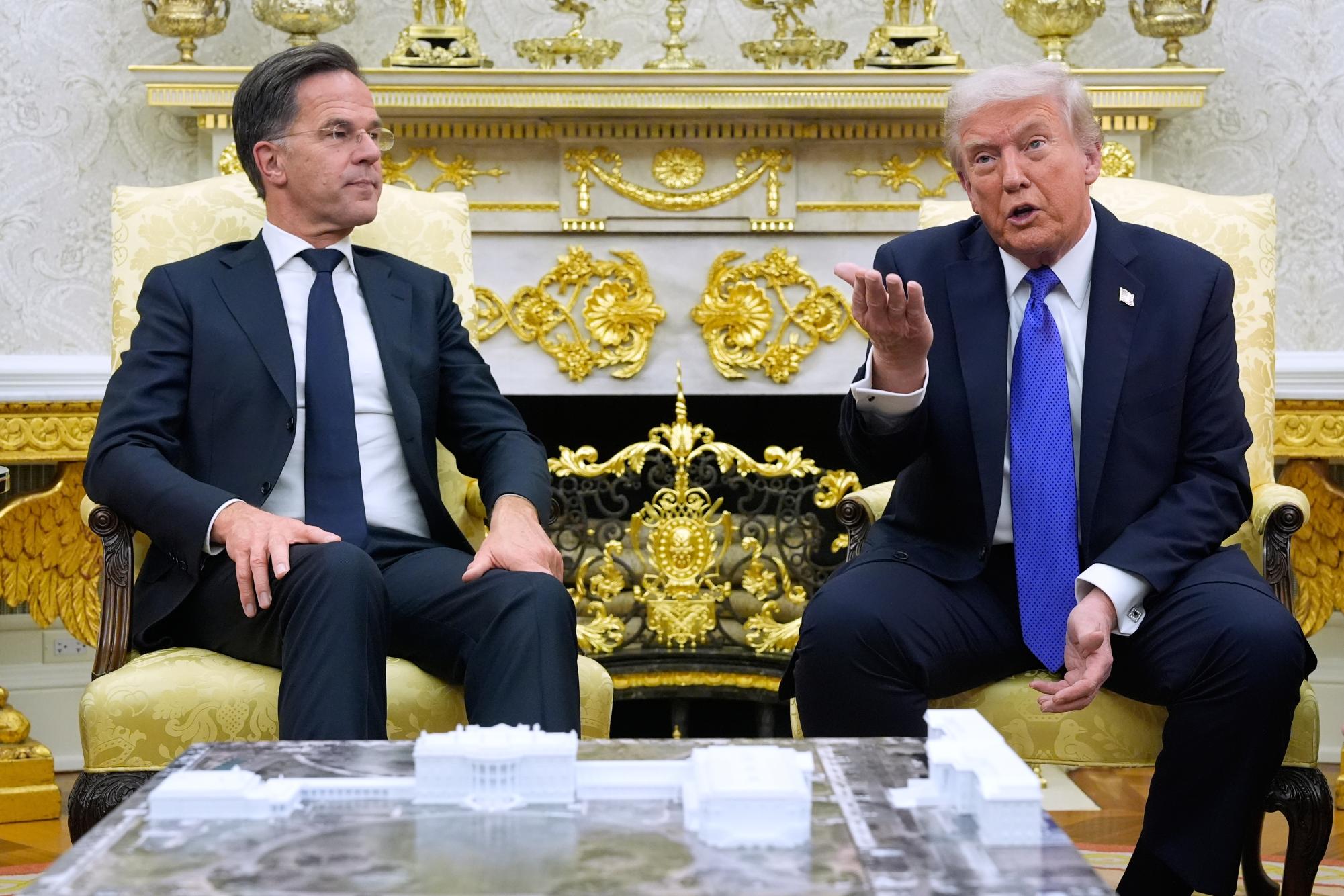
While the United States, Saudi Arabia, Kuwait, and a number of other partners in the Gulf have been actively involved without participating in offensive strikes, NATO seemingly has not been able to get involved until after the fact. According to remarks made by President Trump while speaking to reporters on Air Force One, as well as posts on his Truth Social account, the alliance’s speed and responsiveness have much to be desired, suggesting it is often more reactive than active when crises escalate. He has also pointed to financial imbalance within NATO over the years as another grievance with the alliance, with the United States contributing more to defense spending than other allies combined as of 2025, according to World Data.
President Trump’s criticisms aside, there is more to this story. Although concerns about the alliance’s speed and visible action in cases like the Strait of Hormuz are not without merit, that was not NATO’s original purpose or structure. According to Britannica, its core purpose was collective defense, meaning an attack on one member is treated as an attack on all. In that sense, the current situation does not prompt intervention, as the United States chose to get involved and was not attacked directly.
That is not to say there is no justification for U.S. involvement in the situation. There most certainly are valid reasons. But it does explain why NATO is not always positioned to respond immediately to indirect conflicts, as that was not what it was originally designed to do.
Ultimately, while NATO may not be speedy to respond and while the United States does carry a larger share of the defense budget compared to other members, withdrawal from the alliance is not necessarily a better alternative. Leaving will only single the U.S. out for bigger conflicts down the line, which is not a good trade-off. The main reason why war has yet to escalate to nuclear war is because of NATO’s core policy of collective defense.
Without that, the United States, for better and for worse, would only have itself to rely on, potentially losing some of its influence on trade and global economics.